Key Points
- Props bet on specific outcomes within a game: player stats, team milestones, game events.
- Books often price props with higher vig than standard markets (6–10% hold).
- Player props are less efficient markets. Sharp bettors can find more edges here.
- Same-game parlays (SGPs) with correlated props carry hidden pricing risks.
- Line shopping across books matters most for props. Prices vary widely.
What is a Prop Bet?
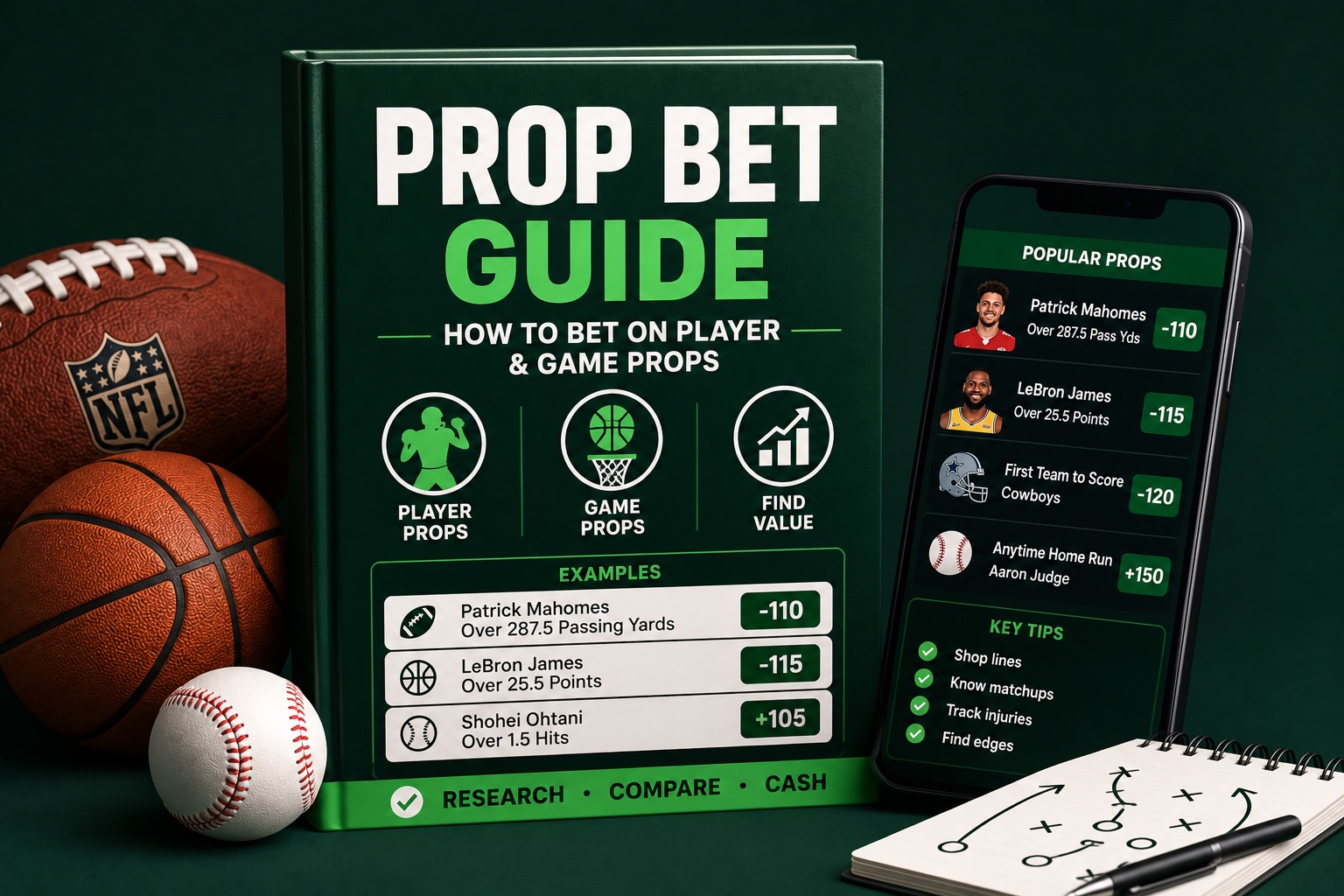
A proposition bet (prop) is a wager on a specific outcome within a game that doesn't directly involve the final score. Props can be about player performance, team milestones, or specific game events.
Examples:
- Patrick Mahomes over/under 287.5 passing yards
- Anytime touchdown scorer: Travis Kelce (+150)
- First team to score: Chiefs (-115)
- Player to record first basket: LeBron James (+400)
Types of Props
Player Props
The most popular category. You're betting on an individual player's statistical performance: passing yards, receiving yards, rushing attempts, strikeouts, points scored, rebounds, etc.
Game Props
Team or game-level outcomes that aren't the final score: first team to score, total first-quarter points, whether the game goes to overtime, etc.
Novelty Props
Non-performance props like coin flip results, halftime show duration, color of Gatorade dumped on the winning coach. Primarily available for the Super Bowl.
Why Props Offer Value
Player props are often less efficient than standard markets. Sportsbooks set hundreds of props quickly, using models that can lag behind real-time information (injuries, weather, lineup changes). Bettors with deeper research into player usage, matchups, and situational data can find edges that don't exist in heavily-watched markets like the spread.
Props are also priced by smaller trading teams than the main markets, so prices vary a lot more from book to book.
The Vig on Props
Props carry higher vig than spreads. A standard spread is priced at -110/-110. A player prop might be -120/-115 or even -130/-110. This means you need to be right more often to profit on props vs. standard bets.
Always calculate the implied probability of both sides. In a no-vig market, the other side of a -130 prop would be +130. If the book offers +100 or -110 instead, that gap is the vig you are paying.
How to Find Value in Props
Research matchups. A running back facing the league's worst rush defense is more likely to go over his rushing yards line.
Track injury reports. A wide receiver whose teammate is ruled out often sees more targets, which shows up directly in his props.
Compare lines across books. Prop pricing varies more than any other market. A receiving yards line might be 62.5 at one book and 67.5 at another for the same player.
Fade injured starter effects. When a QB changes, books often react faster than receiving corps lines do, creating opportunities on WR props.
Same-Game Parlays and Prop Correlation
Same-game parlays (SGPs) let you combine multiple props from the same game. While attractive, be careful of how sportsbooks price correlated outcomes. Parlaying "QB over 300 yards" with "WR over 80 receiving yards" has hidden correlation: when the QB succeeds, so does the WR. Books account for this in their pricing.
Independent props (rushing vs. passing, early game vs. late game) are better SGP building blocks.
Props vs. Standard Bets: Quick Comparison
| Spreads/Totals | Player Props | |
|---|---|---|
| Market efficiency | High | Moderate |
| Typical vig | 4–5% | 6–10% |
| Line availability | All books | Varies widely |
| Research edge | Hard | More accessible |